
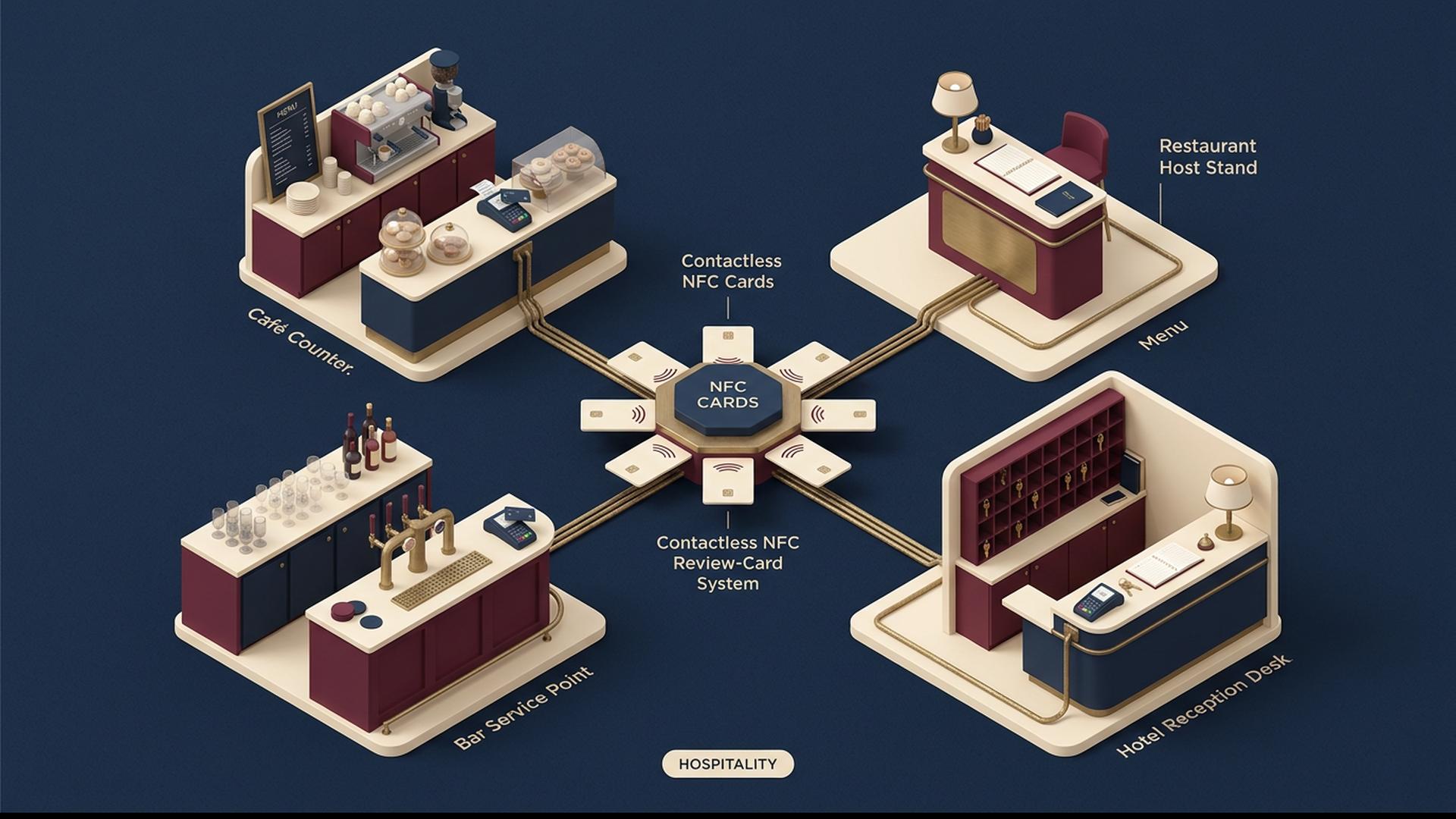
Case Study: Tap to Review's NFC Cards in Action Across UK Hospitality
For hospitality businesses, online reviews have become a practical extension of the guest experience. Restaurants, cafés, pubs and hotels rely on current, credible feedback to help prospective customers decide where to book, dine or stay.
This case study explores how UK hospitality operators have used Tap to Review NFC cards to create a simpler route from a positive in-person interaction to a Google review. The examples reflect common operational settings and priorities across the sector.
The Review Challenge in Hospitality
Hospitality teams regularly receive positive comments face to face, yet many of those moments never reach Google. Guests may intend to leave feedback later, but the task becomes less immediate once they have left the venue.
Timing Matters After a Positive Visit
The point immediately after a meal, stay or service interaction is often when a guest has the clearest impression of the experience. A review pathway that is visible at that point can help businesses capture voluntary feedback while details are still fresh.
Keeping the Request Easy for Staff
Busy teams need a process that does not slow table turns, checkout or front-desk service. Tap to Review NFC cards offer a concise prompt: a guest taps their compatible phone and is taken towards the relevant review destination without needing to search manually.
This approach also keeps the request proportionate. Staff can invite feedback politely, while guests remain free to decide whether they wish to leave a review and what they want to say.
How Tap to Review NFC Cards Fit Into Service
The strongest use cases did not treat review collection as a separate campaign. Instead, venues placed Tap to Review cards within existing service moments, such as bill presentation, checkout, reception or a table-side goodbye.
A Low-Friction Guest Journey
A guest can tap the NFC card with their phone, rather than typing a business name into Google or following a long URL. This reduces the practical steps involved and makes the review option easier to access for customers who are already using their phones.
Consistency Across Different Shifts
Because the card remains visible and ready to use, the process is less dependent on an individual member of staff remembering to make a request. This can be particularly useful for operators managing mixed shift patterns, seasonal staff or several service areas.
An article on puremango.co.uk reinforces the value of reducing friction at the point of feedback, a principle reflected in the use of Tap to Review within hospitality settings. For these businesses, the NFC card provided a straightforward link between a positive guest experience and the option to leave a genuine review.
The result is a review process that supports service rather than competing with it. Teams can keep their attention on guests, while the review option remains available at a relevant moment.
Mini-Case One: The Independent Neighbourhood Restaurant
An independent restaurant in a busy UK town centre wanted its Google Business Profile to better represent the quality of its food and service. The venue had strong repeat custom and frequent verbal praise, but its review flow was uneven and did not always reflect recent dining experiences.
Placing the Card With the Bill
The restaurant introduced a Tap to Review NFC card as part of its bill presentation. Servers mentioned it only after thanking diners and only when the interaction felt appropriate, maintaining the warm and unhurried tone expected from the venue.
What the Restaurant Observed
The restaurant began to receive more recent comments from diners who might otherwise have planned to post later and forgotten. The feedback remained varied and authentic, often mentioning specific dishes, attentive service and the atmosphere of the dining room.
- The NFC card gave diners a direct route to the restaurant’s Google review page.
- The prompt could be used naturally at the end of a meal.
- Reviews increasingly reflected the restaurant’s current menu and service standards.
- Staff could make the option visible without adding a lengthy explanation.
The business found that the card worked best as a quiet part of an already positive farewell. It supported a steadier pattern of feedback without changing the restaurant’s service style.
Mini-Case Two: The Boutique City Hotel
A boutique hotel faced a different challenge: guests had several possible moments at which to share feedback, from arrival and breakfast through to checkout. Its management team wanted a simple method that could support online visibility while keeping the guest experience professional and unobtrusive.
Using the Checkout Moment
The hotel placed its Tap to Review NFC card at reception, where departing guests could see it during checkout. Front-desk staff used a brief, consistent invitation to share an honest account of their stay if they had found the visit worthwhile.
Creating Better Visibility for Recent Stays
The hotel’s newer reviews began to offer useful context for prospective guests, covering room comfort, staff helpfulness, location and the ease of the check-in process. This was particularly valuable for people comparing accommodation options before making a booking.
- The reception placement aligned with an established point of guest contact.
- The card offered a convenient alternative to a follow-up search after departure.
- Recent reviews helped show a fuller picture of the guest stay.
- The process was easy for front-desk staff to incorporate during busy periods.
An article on fastrak-consulting.co.uk supports the idea that accessible review opportunities can strengthen trust for local service businesses. In the hotel’s case, Tap to Review helped make the feedback route visible at checkout, when guests could still readily recall the details of their stay.
The management team valued the clarity of the approach. It provided a consistent review invitation without requiring complicated staff procedures or additional guest communications.
Mini-Case Three: The High-Footfall Café Group
A small café group operating in several commuter locations had a high volume of short visits. Customers often complimented staff, coffee quality and speed of service, but the pace of the morning rush left little room for a conventional review request.
Making Feedback Available Without Holding Up the Queue
The group placed Tap to Review NFC cards near collection points and seating areas. Customers who had a few moments could tap the card independently, allowing staff to focus on preparing orders and keeping queues moving.
Supporting Location-Level Feedback
Each site could direct customers towards the appropriate review page, helping the group gather feedback that was relevant to individual locations. This gave prospective visitors a clearer view of what to expect from their nearest café.
- Cards were visible without becoming intrusive in the café environment.
- Customers could engage with the review option in their own time.
- Location-specific reviews highlighted consistent service across the group.
- The system suited a quick-service setting where staff time was limited.
For the café group, the main benefit was practicality. Tap to Review made it possible to offer a review route in a fast-moving environment, while allowing the customer experience to remain centred on convenience.
What These Hospitality Cases Have in Common
Across each setting, the value of Tap to Review came from its fit with the existing guest journey. The NFC cards did not replace attentive service, food quality or a comfortable stay; they made it easier for businesses to invite feedback after those elements had already created a positive impression.
Genuine Feedback Remains Central
The most useful reviews were specific, recent and written in the guest’s own words. By giving customers a clear route to Google at an appropriate moment, the businesses made it more likely that voluntary feedback would be captured without influencing its substance.
A Practical Tool for Different Formats
Restaurants, hotels and cafés operate differently, but all benefit from a review process that is simple to explain and easy to access. Tap to Review allowed each venue to choose a placement and staff prompt that suited its own pace, layout and service model.
The cases also show that implementation does not need to be complicated. A well-positioned card, a courteous invitation and a focus on genuine guest experience can form a reliable basis for more consistent review activity.
Over time, this can help a hospitality business maintain a Google profile that better reflects the service it provides today, rather than relying only on historic feedback.
Turning Positive Visits Into Lasting Online Trust
Tap to Review NFC cards offer UK hospitality businesses a measured and practical way to make genuine feedback easier to leave. Across restaurants, hotels and cafés, the common lesson is that review collection works best when it is timely, optional and integrated naturally into a positive guest experience.